Field notes
How to get paid faster on trade jobs (without sounding desperate)
Late invoices are a process failure, not a personality trait. Same-day sending, a printed due date, a three-step reminder, and the right to pause work will move cash more than any template.
4 Sept 2026 · 8 min read · MyOnlineInvoice
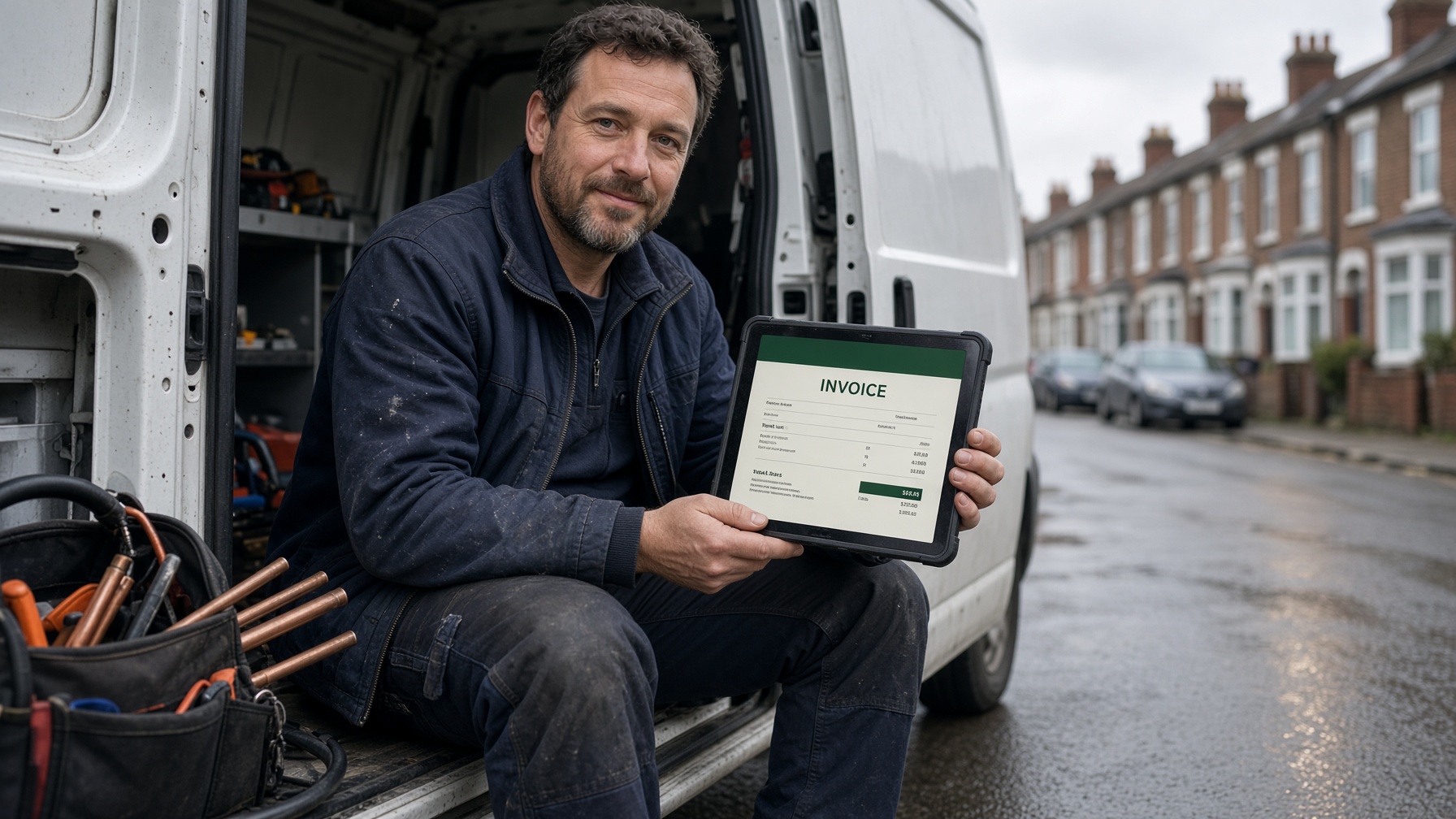
- Invoice sent
- Same day
- Default terms
- 14 days
- Reminders
- 3
- If still open
- Pause
While they can still see the work
A date, not ‘when you can’
Day 15, 21 and 28 — same facts
Do not book the snagging visit
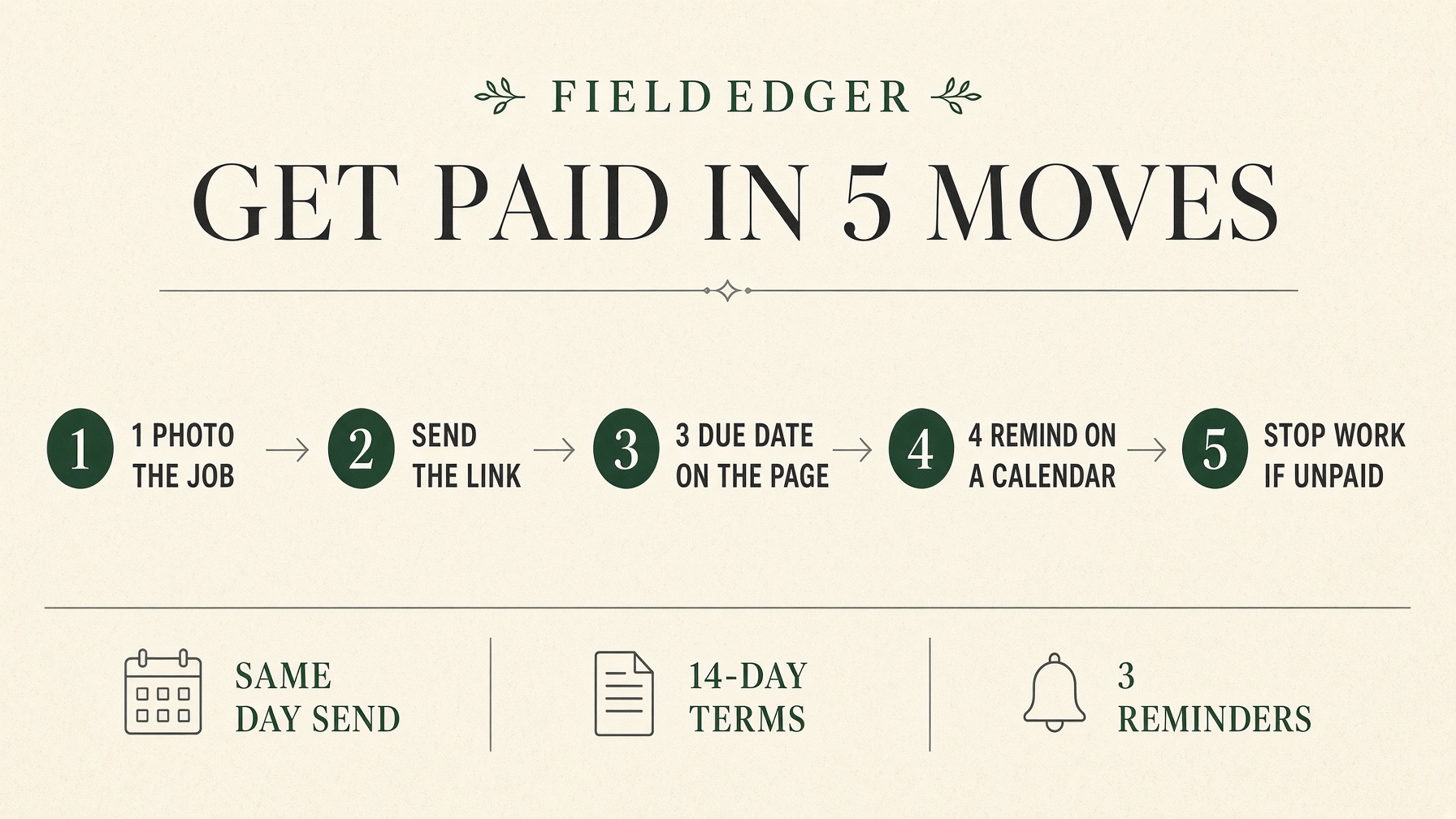
Process
- 1
Photograph the finished job
One wide, one detail, one serial/model if relevant. These are evidence, not Instagram.
- 2
Raise the invoice on the drive
Customer, lines, VAT, due date. Share the public link by WhatsApp before you turn the key.
- 3
Print a calendar date
‘Due 19 September 2026’ beats ‘14 days’. Repeat it in the message.
- 4
Remind on a schedule
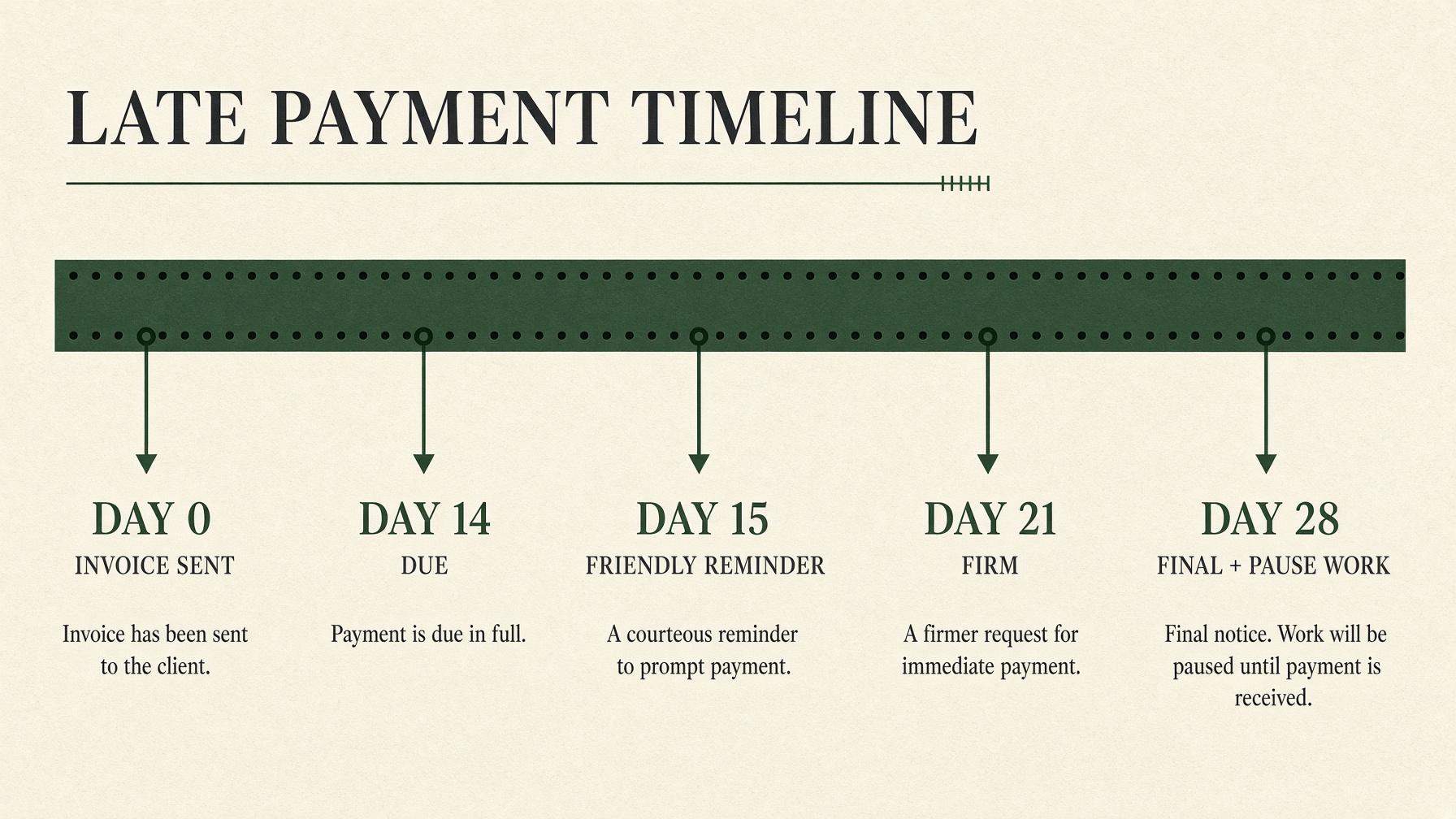
Friendly the day after due, firm at seven days late, final at fourteen. Never write a new novel.
- 5
Stop the next visit
The second appointment is the only leverage most trades actually have. Use it politely.
You finished the bathroom on Friday. The invoice left your kitchen table the following Thursday. By then the customer is on a ferry, the job is “done” in their head, and you are the person chasing. That gap — not your rates, not your VAT, not your font — is where most trade cash goes to die.
This is a working sequence, not a mindset lecture. It assumes you already do competent work and write a real invoice. It does not assume you enjoy bookkeeping.
Why “I’ll do the invoices on Sunday” loses you a week
Domestic customers pay what is in front of them. Once the van has gone, you are a memory competing with the weekly shop. Commercial customers pay what is in their purchase-ledger queue, and that queue is dated from when they received the bill, not from when you did the work.
If you send on day six, you have already gifted them a free week plus whatever terms you printed. A 14-day invoice sent late is a 20-day invoice. Firms that “always have cashflow problems” are often just always late to bill.
The test is ugly and useful: look at your last ten paid invoices. How many days between last labour on site and the email or WhatsApp with the link? If the median is more than one day, you do not have a collections problem. You have a sending problem.
Send before you leave the drive
The best invoice exists while they can still see the tiles. Photograph the job (wide, detail, any serial), add the lines, put the VAT on, set the due date, and send the public link before you turn the key.
That is not a productivity hack. It is using the only moment the customer still feels the work. A WhatsApp that says “Invoice INV-1048 for the ensuite — due 19 September — pay link inside” beats a PDF they have to download, print, and lose.
If the job is too messy to finalise on the kerb (variations not agreed, materials not in), send a draft status or an on-account invoice for the agreed chunk and a one-line note that extras follow when signed. Silence until “everything is perfect” is how extras vanish.
What to put in the message
Three lines. Invoice number. What the job was. Due date. Link. Nothing about your week, the traffic, or how much you “appreciate them”. They know.
Put a calendar date, not a vibe
“Payment due in 14 days” is a date only if you also print the date. “Pay when you can” is a wish. “Net 30” on a domestic boiler swap is a habit copied from a supplier, not a policy.
Write Due 19 September 2026 on the document. Repeat it in the message. If you take deposits, the remaining balance is due on completion, and that second invoice goes out the same afternoon — not when you next “do the books”.
Suggested defaults (write them on the estimate)
- Call-outs and one-day jobs: due on completion, or 7 days if they were not home to pay.
- Quoted works under £2,000: 7 or 14 days from invoice date.
- Larger domestic refurbs: deposit to book, stage invoices, balance on completion.
- Account customers you actually trust: 14 or 30 days, reviewed once a year.
The number matters less than the fact that it is a number, printed, and identical on the estimate and the invoice.
One link, not a PDF in five apps
Email plus WhatsApp plus a printed copy is fine. Asking them to log into a portal they have never heard of is not. A public invoice page they can open on a phone, see the amount, and pay from their bank (or card, if you have that) beats a sort-code hunt in the footer.
Bank details still belong on the PDF for the accounts person who pays on a Tuesday. They are the fallback, not the plan. If your only instruction is “please transfer to 04-00-04”, you have chosen the slowest path on purpose.
Remind on a calendar, not when you are angry
Chasing feels personal because it is your money. The customer experiences it as admin. So make it admin.
- Day after due: “INV-1048 was due yesterday. Amount £1,840. Same link.”
- Seven days late: “Second reminder. Work completed 5 September. Link below. If there is a dispute, reply with the line you disagree with.”
- Fourteen days late: “Final reminder. We will pause further visits until this is settled.” Then actually pause.
Do not write a new essay each time. Same facts, same link, escalating only the consequence. If you threaten court on day three you have nowhere to go, and you look like someone who will not follow through.
Keep a written log on the invoice (date, channel, who you spoke to). When a customer says “nobody told me”, you have the thread.
Stop work if the last one is still open
This is the lever. The snagging visit, the service, the next bathroom — that is the thing they still want. A polite “I’ll book the follow-up once INV-1048 is settled” collects more money than a solicitor’s letter you will never send.
Apply it evenly. If you only pause work for people you dislike, you do not have a policy. You have a mood.
For new customers, do not start the next phase of a multi-stage job until the last stage is paid. That single rule prevents the classic “they still owe the first fix and we are on second hit”.
Deposits, variations, and the jobs that always go late
Cashflow is often lost before the invoice:
- No deposit on a three-week job, so you fund their bathroom.
- Variations agreed on WhatsApp, never added as a line, then disputed.
- Estimate treated as a cap, extras treated as a betrayal.
Fix it upstream. Deposit to book (materials + a slice of labour). Written variation — even a one-line “extra towel rail, £180 + VAT, ok?” — before you buy the rail. Convert the estimate to an invoice; do not keep editing the same PDF until nobody knows what was agreed.
What the law actually gives you (UK)
On business-to-business contracts, the Late Payment of Commercial Debts (Interest) Act 1998 lets you claim statutory interest (Bank of England base rate plus 8%) and a fixed recovery fee. You should say in your terms that you will. You should use it on account customers who treat you as a free overdraft, not on a family whose boiler died on a Sunday.
On consumers, the Consumer Rights Act and fairness rules matter more than swagger. Clear terms before work starts, a right to a reasonable time to pay if you offered one, and no junk fees. If the work is incomplete or defective, chasing harder will not make you right.
This is not legal advice. It is a reason to print terms on the estimate, not invent them when you are unpaid.
A 30-day reset if you are already behind
- List every open invoice older than 7 days. Amount, date sent, last chase, whether more work is booked.
- Send one factual reminder each, with the pay link, today.
- Pause any booked follow-up against an overdue bill. Tell them why in one sentence.
- From tomorrow, no job leaves the drive without an invoice or a written reason.
- After two weeks, look at the median send delay again. That number is the business.
You do not need a new personality. You need a same-day send, a printed due date, three calendar reminders, and the nerve to keep the diary empty until the last one is paid.
MyOnlineInvoice is built so that sequence fits on a phone in the van. The software is not the point. The sequence is.
Questions people actually ask
- Is 14 days too long for a one-day job?
- For domestic call-outs many firms use due on completion or 7 days. 14 days is a default for larger works. Put the rule in the estimate so it is not a surprise.
- Should I take card on the doorstep?
- If you have a reader and the customer is standing there, yes. For larger balances a pay-by-bank link on the invoice is cleaner than asking them to type a sort code.
- What if they say the invoice never arrived?
- Send the same public link again. Do not attach a new PDF with a new number. The original invoice number is the audit trail.
- Can I charge interest on late commercial invoices?
- On business-to-business work, the Late Payment of Commercial Debts (Interest) Act 1998 lets you claim statutory interest and a fixed recovery sum. Put the right to do so in your terms. Domestic customers are different — be careful.
- Does a pretty template get me paid faster?
- No. Speed of sending, a due date, a working pay link, and a pause on further work do. Design matters only so the document looks like a bill, not a sketch.