Field notes
Should a plumber take deposits? A policy you can say out loud
A deposit is not greed. It is how you stop funding other people’s bathrooms. Here is a policy that is fair on consumers, useful on materials, and easy to write on an estimate.
2 Sept 2026 · 8 min read · MyOnlineInvoice
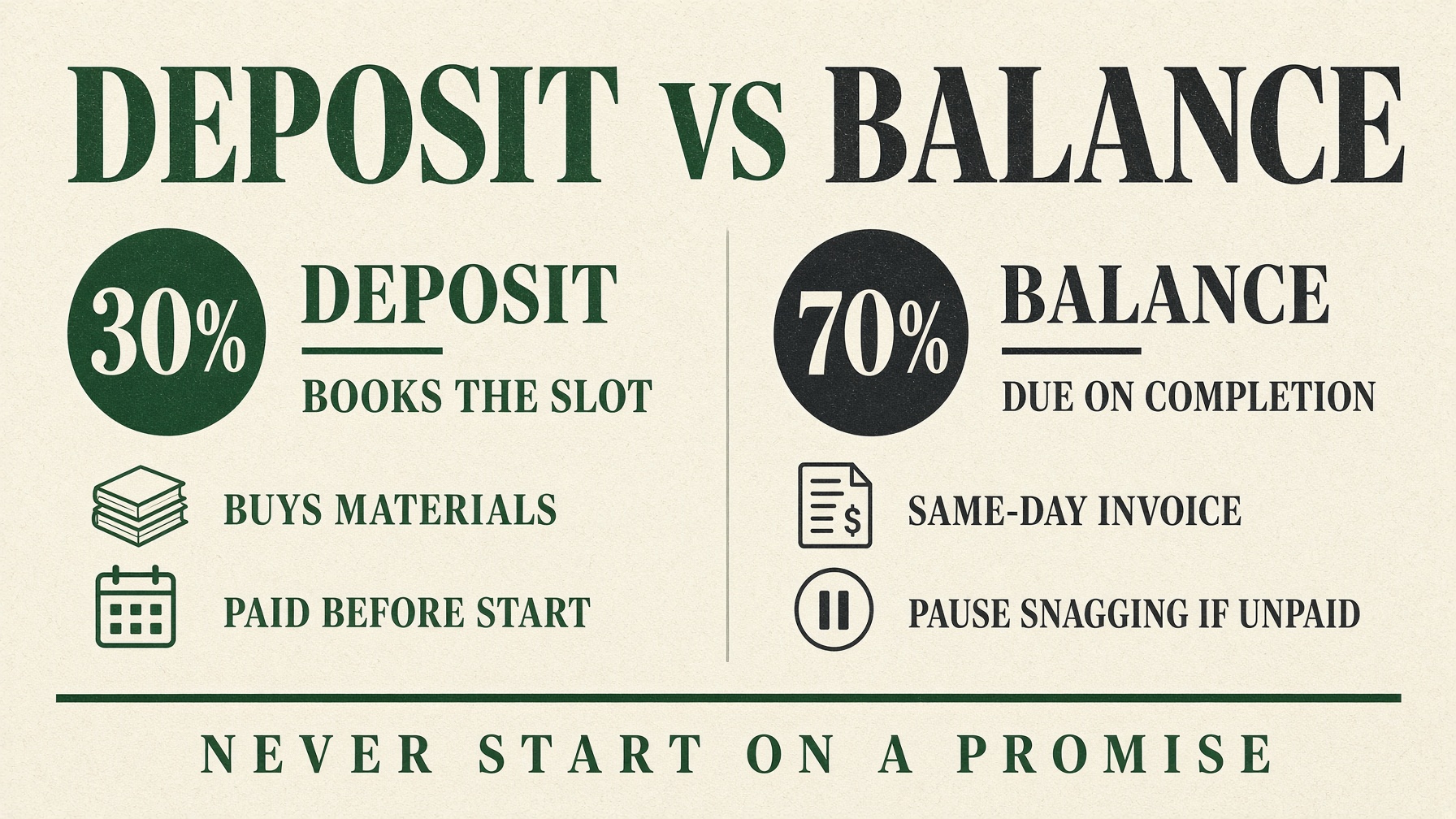
- Typical book-in
- 30%
- Special-order kit
- 100%
- True emergencies
- 0%
- Balance invoice
- Same day
Or materials + 10%, whichever is higher
If you cannot return it, they fund it
Boiler down, they are home — bill on the day
Completion is the tax point you can defend
Process
- 1
Write the deposit on the estimate
Amount, when it is due, what it covers, and that the date is not held without it.
- 2
Take it before you order
Especially sanitaryware, boilers, and anything with a lead time.
- 3
Invoice it properly
A real invoice or stage invoice, not a sort code in a text.
- 4
Do the work
Variations in writing. Photos at the end.
- 5
Balance due on completion
Send the remaining invoice before you leave. Pause snagging if it is unpaid.
A deposit is how you stop being the bank. It is not a personality test and it is not a trick. Materials come from a merchant who wants money this month. Your diary, once blocked, cannot be sold twice. The customer who “needs to speak to their partner” after you have ordered the bath is not a customer. They are a consignment risk.
This is a policy you can print on an estimate and say in a kitchen without wincing.
When you should not take one
Emergencies. The boiler is off, it is January, they are in the house. Diagnose, fix if you can, invoice before you leave, due on completion. A deposit here looks like hostage-taking.
Tiny jobs. A tap, a siphon, a thermostat. The admin of a deposit is worth more than the risk.
Customers on account you have actually run for a year. Not “a friend of a friend who is a landlord”.
When you always should
- Sanitaryware, boilers, cylinders, special-order valves — anything you cannot return cleanly.
- Jobs that block more than a day in the diary.
- New customers on quoted works over a threshold you pick (many firms use £750 or £1,000).
- Any job where you are buying ahead.
A useful formula: materials plus 10%, or 30% of the quoted total, whichever is higher, due when they accept the estimate. 100% of special-order kit if the merchant will not take it back.
Write the formula once. Do not invent a new percentage in each hallway.
Consumer law, refunds, and not being a villain
You can take deposits from consumers. You cannot hide unfair lock-in. If they cancel because you missed the start date by a fortnight, you are in a weak place keeping the money. If they cancel because they chose a different suite, and you have already bought a non-returnable bath, keeping the committed cost is the point of the deposit.
Say this on the estimate, in English:
- The diary date is held when the deposit clears.
- Special-order items are ordered after the deposit and are non-refundable once ordered.
- If we cancel, the deposit is refunded.
- If they cancel before we have ordered or started, we refund less a reasonable admin (pick a number, print it).
- If they cancel after we have ordered, we retain proven committed costs.
Then follow it. A policy you ignore is worse than no policy.
How to take it without friction
Put the deposit line on the estimate. “To book: £1,140 (30%). Balance on completion.” Send the estimate. When they say yes, send a deposit invoice with a pay link the same hour — not a sort code in the chat.
When it lands, order the kit. Not before.
At completion, send the balance invoice before you leave the drive, referencing the deposit already paid so the gross, VAT, and net payable are obvious. If they want to “settle up next week”, that is a no. The snagging visit waits.
What this does to cashflow
You stop floating £4,000 of someone else’s bathroom. You find out who was never going to book before you have a van full of theirs. You have a paper trail when a relationship goes sour.
You will lose a few tyre-kickers. That is the filter working.
Pair this with same-day invoicing on the balance and you have a business. Without the deposit, you have a hobby that extends credit.

Questions people actually ask
- Is a 50% deposit legal on a domestic bathroom?
- Taking a deposit is legal. Unfair terms and poor refund practice are not. If you cancel, or they cancel with a statutory right, you need a clean way to refund what you have not earned or committed. Put the rules on the estimate.
- What about call-outs?
- Do not take a deposit to drive across town for a tap. Bill on the day, due on completion. Deposits are for booked works with materials and diary risk.
- They want to pay the deposit in cash.
- You can. Receipt it against the invoice number the same day so VAT and the books match. Cash without a document is how both of you get confused at the end.